

The second day of the regional meeting focused not only on discussions, but also on building practical solutions together.
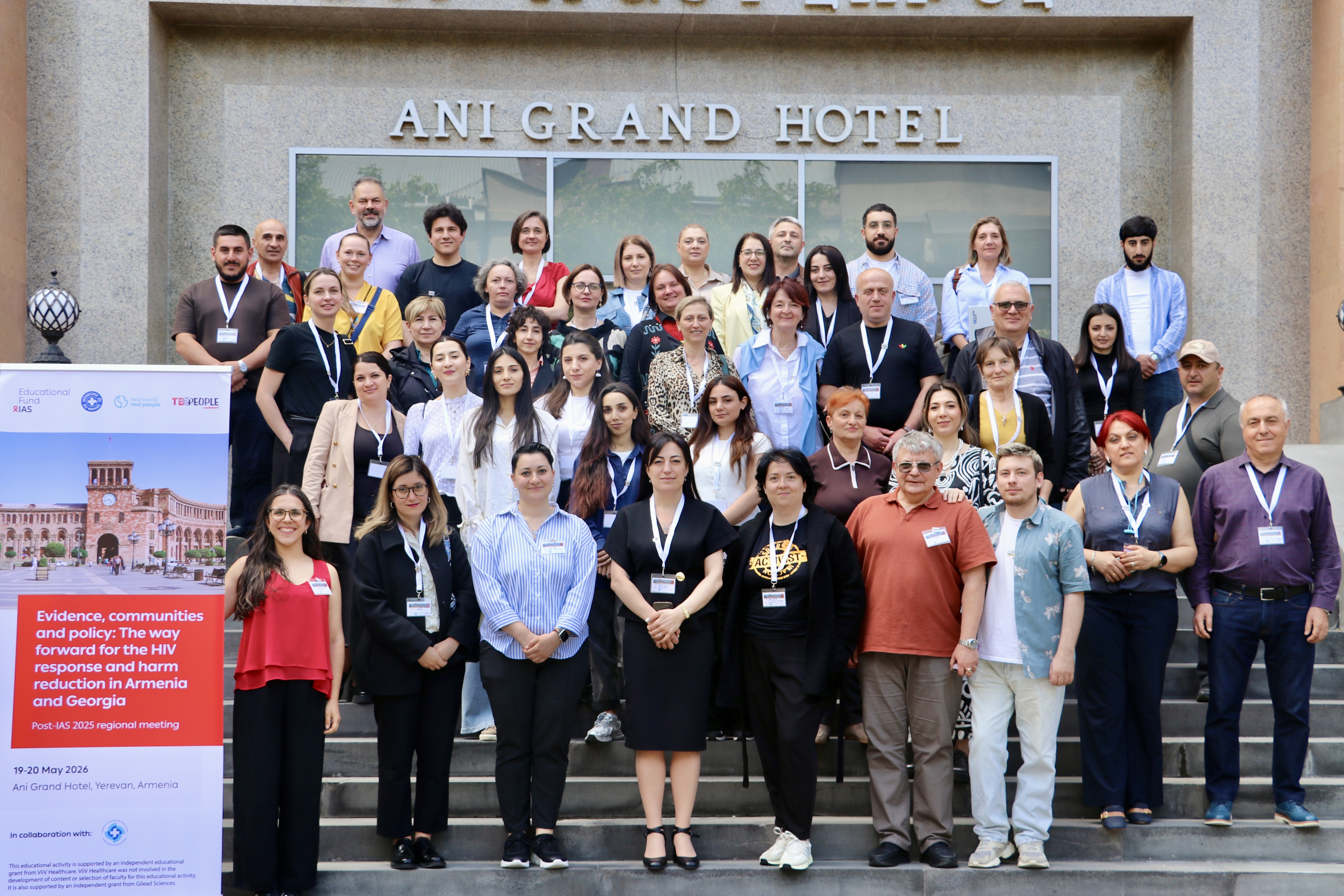
On May 20, the regional meeting in Yerevan continued with sessions dedicated to HIV response, harm reduction, human rights, and sustainable policymaking. The event was organized through the joint efforts of the International AIDS Society (IAS), Médecins du Monde Armenia, Real World, Real People NGO, and the TBpeople global network.
Throughout the day, participants explored issues related to intellectual property, innovation, and access to HIV medicines, with special attention given to long-acting treatment options, patent policies, and access to lifesaving medications across the region.
One of the key highlights of the day was the creative laboratory session, where participants from different countries worked in groups to develop practical recommendations aimed at:
- expanding early HIV diagnosis
- improving opioid substitution therapy (OST) programs
- strengthening anti-discrimination policies in practice
- supporting community-led initiatives
- and ensuring sustainable financing for the HIV response.
The day concluded with presentations of the developed recommendations, discussions on future collaboration, and a strong emphasis on the importance of partnership between communities, government institutions, and international organizations.
These two days became an important platform for exchanging experience, strengthening partnerships, and shaping ideas capable of bringing real change to people’s lives.
On May 20, the regional meeting in Yerevan continued with sessions dedicated to HIV response, harm reduction, human rights, and sustainable policymaking. The event was organized through the joint efforts of the International AIDS Society (IAS), Médecins du Monde Armenia, Real World, Real People NGO, and the TBpeople global network.
Throughout the day, participants explored issues related to intellectual property, innovation, and access to HIV medicines, with special attention given to long-acting treatment options, patent policies, and access to lifesaving medications across the region.
One of the key highlights of the day was the creative laboratory session, where participants from different countries worked in groups to develop practical recommendations aimed at:
- expanding early HIV diagnosis
- improving opioid substitution therapy (OST) programs
- strengthening anti-discrimination policies in practice
- supporting community-led initiatives
- and ensuring sustainable financing for the HIV response.
The day concluded with presentations of the developed recommendations, discussions on future collaboration, and a strong emphasis on the importance of partnership between communities, government institutions, and international organizations.
These two days became an important platform for exchanging experience, strengthening partnerships, and shaping ideas capable of bringing real change to people’s lives.